

27 Nov. Difficult Probation Period in Germany: Are You Being Given a Fair Chance to Improve?
Your manager says, “We expected you to be further along by now.” Then the meeting moves on. If you’re in a probation period in Germany, that comment leaves you with two questions: what needs to change, and is there still time to show the change before your employer decides whether you stay?
The problem is not that the feedback was negative. It’s that you can’t act on it until someone explains what fell short and what better work looks like. Even then, a review date only helps if the person making the decision can still take the result into account.
Do You Get a Warning During a Probation Period in Germany?
“You’ll get a warning or an improvement plan before anyone lets you go.” That assumes your employer has such a process and that you’ll see it before a decision is made.
A performance improvement plan (PIP) is not a standard statutory step. Where general dismissal protection does not apply, an ordinary dismissal with notice generally does not require a prior formal warning or a set improvement period. The employer generally does not have to state the grounds in the notice to you. That does not make every dismissal lawful: other protections and applicable agreements can matter. See the German Protection Against Dismissal Act (KSchG), §§ 1 and 23 and this explanation of probation and the statutory waiting period.
So don’t wait for a formal warning before asking what a vague comment means. Equally, don’t treat every criticism as a sign that dismissal is coming. The point of asking is to find out which conversation you’re in.
How to Turn Probation Feedback Into Work You Can Show
Ask What Fell Short and What Should Change
In this composite example, an experienced electrical engineer joins a German energy contractor. In month four, their manager says, “We expected you to handle the grid-connection submissions more independently.” Your First 90 Days in Germany: Make the Expectations Explicit
When asked for an example, the manager points to two submissions that reached internal review without a record of the assumptions discussed with the grid operator. The engineer had understood that the project lead would add those. The manager wants the engineer to document each open assumption and name who will confirm it before the file goes to review.
Now there’s something the engineer can change. “Work more independently” is open to interpretation. A file with named assumptions and owners can be reviewed against a clear standard.
Check Whether the Review Comes Before the Decision
The next submission is due in three weeks, but the manager has to make a recommendation next Friday. Instead of waiting for the next submission, the engineer could revise an earlier file and ask for it to be reviewed before Friday. If nobody will look at it in time, the review won’t help the manager make that recommendation.
You can ask:
Could we look at one example of what fell short and agree what you’d want to see instead? When can we review the revised work, and will that happen before the decision about whether I stay?
If you need an approved example, system access or input from a colleague, say so while agreeing the task. Afterwards, send a short note with your understanding of the work, the support and the review date. Invite corrections. A note helps catch misunderstandings; silence does not turn it into an agreement.
What Your Contract Can Tell You, and What It Can’t
Your contract can tell you what probation and notice terms you agreed to. An intranet policy or applicable works agreement may set out how probation reviews are handled. Neither necessarily tells you when your manager has to make a recommendation or when someone else will make the decision. Ask the manager or HR who decides and whether any planned review can still inform that decision. The German Employment Contract – What To Read Before You Sign
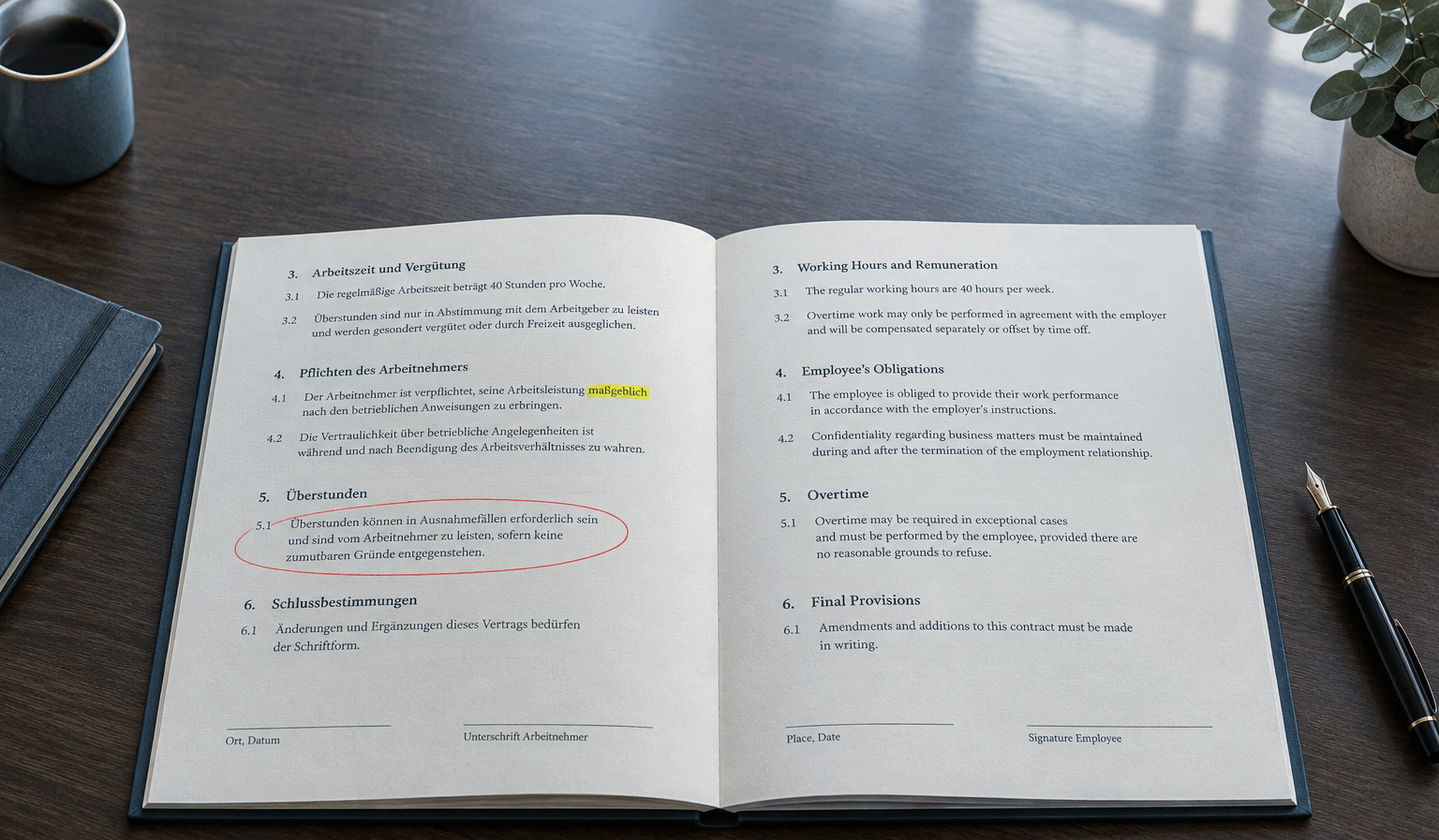
Probation Notice Period and Dismissal Protection in Germany
Contractual probation (Probezeit) and general dismissal protection are separate. During agreed probation, § 622(3) of the German Civil Code (BGB) provides for a two-week statutory notice period for up to six months. Check your contract and any applicable collective agreement for terms that affect the notice period.
General protection under the KSchG normally requires more than six months of continuous employment and depends on the size of the establishment. For most newer hires, the threshold is more than ten employees under the statutory counting rules. For example, a three-month contractual probation period can end before the six-month waiting period for general dismissal protection has elapsed. See KSchG, §§ 1 and 23.
What the Works Council Can Tell You
If there is a works council (Betriebsrat), the employer must consult it before dismissal and tell it the grounds for the intended dismissal. That consultation is not a personal warning or an opportunity to improve. HR can explain the employer’s process. The works council, where one exists, is a separate place to ask for advice. See § 102 of the Works Constitution Act (BetrVG).
What a Fair Employer Should Explain
The manager who sees your work should give you a concrete example and explain the standard. The company should say who will assess the change, what support is available and how much time you have. If no further review can influence the decision, the employer should say so plainly rather than schedule a meeting that implies otherwise.
That is fair management, not a list of legal duties. Your part is to do the agreed work, raise obstacles and respond to specific feedback. Your part is not to guess a standard nobody explained or an internal deadline nobody disclosed.
When to Prepare Alternatives
If the concern is specific and there is time to review your response, act on it. Treat that as an opportunity to show the change, not as a promise that you’ll stay.
If the standard keeps moving or nobody can tell you whether the review will count, continue doing the agreed work and prepare alternatives. An unclear assessment is not a reliable verdict on your ability. If the issue is a budget cut rather than your work, a better submission won’t fix it.
If You Receive Written Notice
Keep the notice and record when you received it. Ask for confirmation of your end date, remaining holiday and final pay. You can also request a qualified employment reference (qualifiziertes Arbeitszeugnis), which covers performance and conduct as well as the nature and duration of your work. See § 109 of the Trade Regulation Act (GewO).
If you want to challenge the dismissal, get qualified advice promptly. The usual deadline to bring a claim is three weeks from receipt of written notice (KSchG, § 4). Separately, Federal Employment Agency guidance says to register as a jobseeker no later than three months before employment ends, or within three days of learning the end date if less than three months remain. Registering as unemployed is a separate step.
If your residence permit depends on the job, contact the immigration authority or a qualified immigration adviser promptly. This article provides general information, not an assessment of your contract, dismissal or permit.
About the Author
I’m Bernd Wenske. I’m not a recruiter and I don’t place candidates. I work as a bridge between experienced international professionals and German mid-sized employers. If you’d like to discuss what your employer has communicated during probation and what is still unclear, you can contact me with an individual question.