
24 Dez. When falling in love matters more than being right
Why our future won’t be saved by young or old alone, but by people of all ages who dare to think – and feel – for themselves.
TL;DR:
This is not another hymn to “the young” or a defence of “the old”. It is a call to end the holy war between generations and to remember that we are human beings before we are slogans. The song “All the Young People Must Fall in Love” by Morrissey runs through this piece as a reminder that love, connection, and honesty matter more than our favourite ideology. If there is a way towards a humane future, it lies in adults of all ages who think for themselves and stay human.
You may want to listen to the song first. Here is the link:
Morrissey – All the Young People Must Fall in Love (Official Audio): https://youtu.be/3dBjvXh9hBs
Presidents, illusions, and our daily wars
“Spend more on nuclear war / If that’s your chosen illusion.”
The line is brutal. It exposes something ugly: the willingness to sacrifice real lives for abstract games of power. The song brushes against political madness and then flips back to something disarmingly simple: “All the young people they must fall in love.”
Presidents come, presidents go. That part is easy to accept. The uncomfortable part is this: while they play with their illusions, we play with ours. Most of us are not pushing nuclear buttons. We are not sitting in dark rooms drawing lines on maps. But we wage our own little wars every day. In families. At Christmas tables. In offices. On social media.
There is always a new frontline.
- Climate versus “freedom”.
- Young versus old.
- Urban versus rural.
- “Woke” versus “conservative”.
The details change, the pattern does not. We split into camps, we pick a side, we look for the moral high ground. The weapon is no longer the bomb. It is the sentence. The label. The accusation.
The song says “they never stop talking / but they aren’t allowed to say / they cannot say what they really mean.” This works far beyond presidents. It describes our public life. We talk more than ever. We post, comment, like, and share. Yet many people no longer say what they really mean. They say what will not get them punished by their own camp.
That is one of the indecent secrets of our time: we pretend to be free, but in many circles you are only free to agree.
Young versus old – the fake battle
In Germany in particular, a strong story has taken hold: the future belongs to the young, and the past belongs to the old who messed everything up. The young are climate‑conscious, progressive, morally awake. The old are fossil‑fuelled, selfish, stuck in their ways. You can flip the narrative and hear the older version too: the young are spoiled, fragile, naïve. They want to destroy prosperity in the name of some abstract planet while tweeting from a brand‑new smartphone.
Both stories are easy. Both stories are lazy. Both stories are wrong.
The climate movement has changed policy debates and made uncomfortable truths impossible to ignore. That is valuable. At the same time, some activists and followers slip into moral absolutism, treating disagreement as evil rather than as part of democratic life. On the other side, many older people refuse any responsibility at all. They talk about “the youth” as if they themselves never consumed, never flew, never voted, never looked away.
So here is a potentially offensive point:
- Being young does not make you right.
- Being old does not make you wise.
Age does not grant moral superiority. It does not grant political superiority either. You do not get a free pass because your side claims to “stand on the right side of history”. That sentence alone should set off alarm bells. It turns history into a courtroom and you into the judge.
There is another reason the generational war is fake: interests and identities are far more mixed than the headlines suggest. Many young people are tired of constant outrage and just want a life that feels decent and meaningful. Many older people are deeply worried about the climate and vote or act accordingly. The clean split is an illusion.
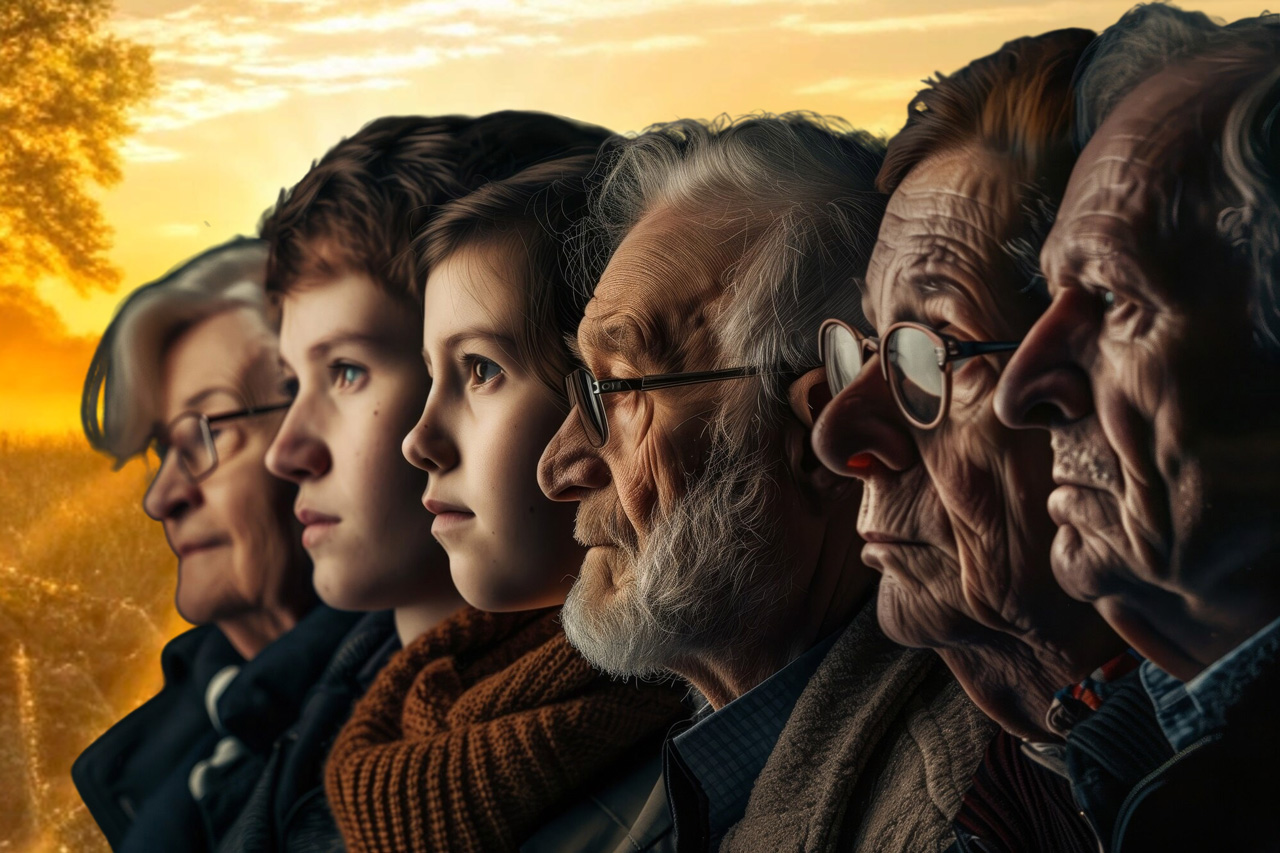
We do not need another holy war between generations; we need adults of all ages who can think for themselves and stay human.
The real problem – we stopped thinking for ourselves
The most dangerous habit in our current culture is not activism. It is not conservatism. It is our willingness to hand over our own thinking.
We delegate it upwards or outwards:
- “The scientists say…”
- “The experts have agreed…”
- “The movement has decided…”
- “My party / tribe / community thinks…”
None of that is bad in itself. Expertise matters. Science matters. Communities matter. But the moment we use them as shields, we stop being honest. We use “the science” or “the movement” like a parent we can hide behind. It is a convenient way to avoid saying: “This is what I believe, and this is why, and yes, I might be wrong.”
We see this in private life too:
- People who no longer visit their family because “you cannot talk to them; they are all on the other side”.
- Teams in organisations who stop working together because each group is sure the others are hopeless cases.
- Friends who tiptoe around each other, afraid that one wrong sentence will end the relationship.
If you need your camp to tell you what you are allowed to say, you are no longer thinking. You are just repeating.
Here comes another provocation: if your opinion fits perfectly into one party programme, one movement, one ideology, and never clashes with it, the odds are high you have stopped asking real questions.
We have built a culture in which doubt is treated as weakness. Nuance is treated as betrayal. Curiosity is treated as disloyalty. That is not critical thinking. That is a soft form of fanaticism.
And then we act surprised when people either scream or shut down.
We are not gods – we are connected
There is a strange form of arrogance that has crept into our daily lives. It shows in phrases like:
- “I have cut all toxic people out of my life.”
- “I do not talk to people who think like that.”
- “If you believe X, we cannot be friends.”
Of course there are limits. Nobody should tolerate abuse. Nobody should accept permanent humiliation or hate. Healthy distance is necessary. But what is happening now goes beyond that. We have turned disagreement itself into a reason to cut ties.
We pretend we can edit our lives like a social media feed. Remove everyone who disturbs us. Mute half a country. Unfollow half a family. As if we were gods who can design human relationships from scratch.
This is an illusion. We are not gods. We are human beings. We are deeply interconnected whether we like it or not.
- The colleague you despise might be the one who covers for you when life crashes into your neat plan.
- The neighbour whose opinions make you roll your eyes might be the one who helps you at three in the morning when you need a doctor.
- The family member you cannot “educate” might still be the person who loves you when your brilliant tribe has moved on to the next trend.
When differences in perspective become insurmountable obstacles everywhere, we pay a heavy price. We lose resilience. We lose the ability to cooperate in real life, not just in curated groups. We lose something essentially human.
In work life this is visible every day. Teams that could build something together instead build walls. Departments become little tribes. HR versus management. Young staff versus old guard. “Innovators” versus “blockers”. Everyone thinks they are on the side of light. The result is predictable: nothing moves, everyone is frustrated.
We are not meant to live like this. Human beings are built for connection and conflict, not for connection or conflict. The art is to handle both at the same time.
What it means to “fall in love” now
“All the young people they must fall in love.”
On first hearing, it sounds sweet and harmless. A simple call to romance. But set against nuclear war, presidents, and political illusions, the line becomes sharper. It is a kind of protest. A refusal to let human feeling be crushed under the weight of grand strategies.
Falling in love, in this context, is not just about romantic partners. It can mean:
- falling in love with nuance,
- falling in love with honest questions,
- falling in love with the strange, difficult, stubborn other person in front of you.
To “fall in love” with nuance is to accept that reality is messy. You can care deeply about the climate and still see that people are afraid of losing their livelihoods. You can respect tradition and still admit that some traditions must end. You can feel loyalty to your group and still say, “We got this wrong.”
To “fall in love” with questions is to let go of the addiction to instant answers. A mature adult can say: “I do not know yet,” without collapsing. Or: “I changed my mind.” That is not a weakness. That is a sign of life.
To “fall in love” with the other is perhaps the most provocative of all. It means you decide to keep seeing the human being behind the opinion. Not to excuse everything. Not to accept abuse. But to refuse the easy move of turning people into monsters because it feels good.
Imagine a Christmas where:
- young people do not roll their eyes at every word from their grandparents,
- older people do not mock every concern of the younger ones,
- both sides accept that they share the same small planet and the same small table.
Imagine a workplace where you do not need to agree on everything to work together. You just need enough trust to argue honestly without fear of exile.
This is where the song comes back for the third time. Presidents come, presidents go. Politicians talk. Media storms come and go. Two weeks later, nobody remembers. The damage remains, and so do we.
What stays is the quality of our relationships. The way we look at each other. The way we listen. The way we allow others to be wrong, learning, different. That is what “falling in love” can mean in a mature, non‑romantic sense: not worshipping someone, but staying open to them.
A quiet invitation for the coming year
The easy path for the next year is clear.
- Pick a side.
- Memorise the slogans.
- Cancel the people who disturb your worldview.
- Spend your energy proving that your generation, your movement, your camp is the better one.
You will have company. You will feel righteous. You will also be part of the problem.
The harder path is quieter:
- Think for yourself, even when your camp will not like it.
- Stay connected to people who do not share all your views.
- Defend your convictions without turning others into enemies.
- Accept that being human is riskier than being a slogan.
We do not need another holy war between generations; we need adults of all ages who can think for themselves and stay human. That is not a cosy Christmas wish. It is a demanding one. It asks for courage, humility, and a certain tenderness towards our own imperfections and those of others.
If “all the young people must fall in love”, perhaps all of us must.
Not blindly. Not sentimentally. But consciously. With the world. With truth, even when it hurts. With each other, even when it is difficult.
That is the only future that deserves to be called humane.
Short summary
This article uses Morrissey’s “All the Young People Must Fall in Love” as a thread to explore our polarised culture and the fake war between young and old. It argues that both camps fall into the same trap: outsourcing their thinking to movements, parties, or identities and treating doubt as betrayal. The text challenges the idea that one generation or ideology owns the truth and calls out the arrogance of “playing God” with relationships by cutting people off at the first sign of disagreement. It proposes a different path: adults of all ages who think for themselves, stay connected across differences, and “fall in love” with nuance, questions, and other human beings.